← Journal KODAMA
JOURNAL / PSYCHOLOGY
KODAMA JOURNAL PSYCHOLOGY 8 MIN READ

The psychology of the stranger

We imagine that a double life leaves deep cracks in the floorboards. We believe a hidden identity is loud, fragile, and constantly on the verge of spilling over. Yet history shows the opposite: people can live for years beside a neighbor harboring a secret life, seeing everything and registering nothing.

SCROLL TO READ

The man three doors down was unfailingly polite. He mowed his lawn on Saturday mornings, waved back when the local school bus rolled past, and occasionally complained about the persistent moisture in his basement. When federal agents finally surrounded his house at dawn, neighbors stood on their porches in bathrobes, blinking in the morning light, telling reporters that he was the last person on earth capable of deception.

This scene has played out across decades with dizzying consistency. It triggers a grim, skeptical curiosity in us: How could they not know? How do you share a fence, a fence-line conversation, or a quiet cup of coffee with someone whose existence is built upon an elaborate fiction, while remaining entirely blind to the weight beneath their words?

The answer lies not in their gullibility, but in the structural mechanics of human perception. Daily life requires an immense amount of cognitive filtering. To function in a society, we must rely on social scripts and predictable routines. We assume that the people around us are who they present themselves to be, because the alternative—treating every human interaction as a potential threat requiring deep forensic analysis—would render sanity impossible.

We do not fail to see the truth because we are careless. We fail to see it because our minds are wired to preserve the comfort of routine.

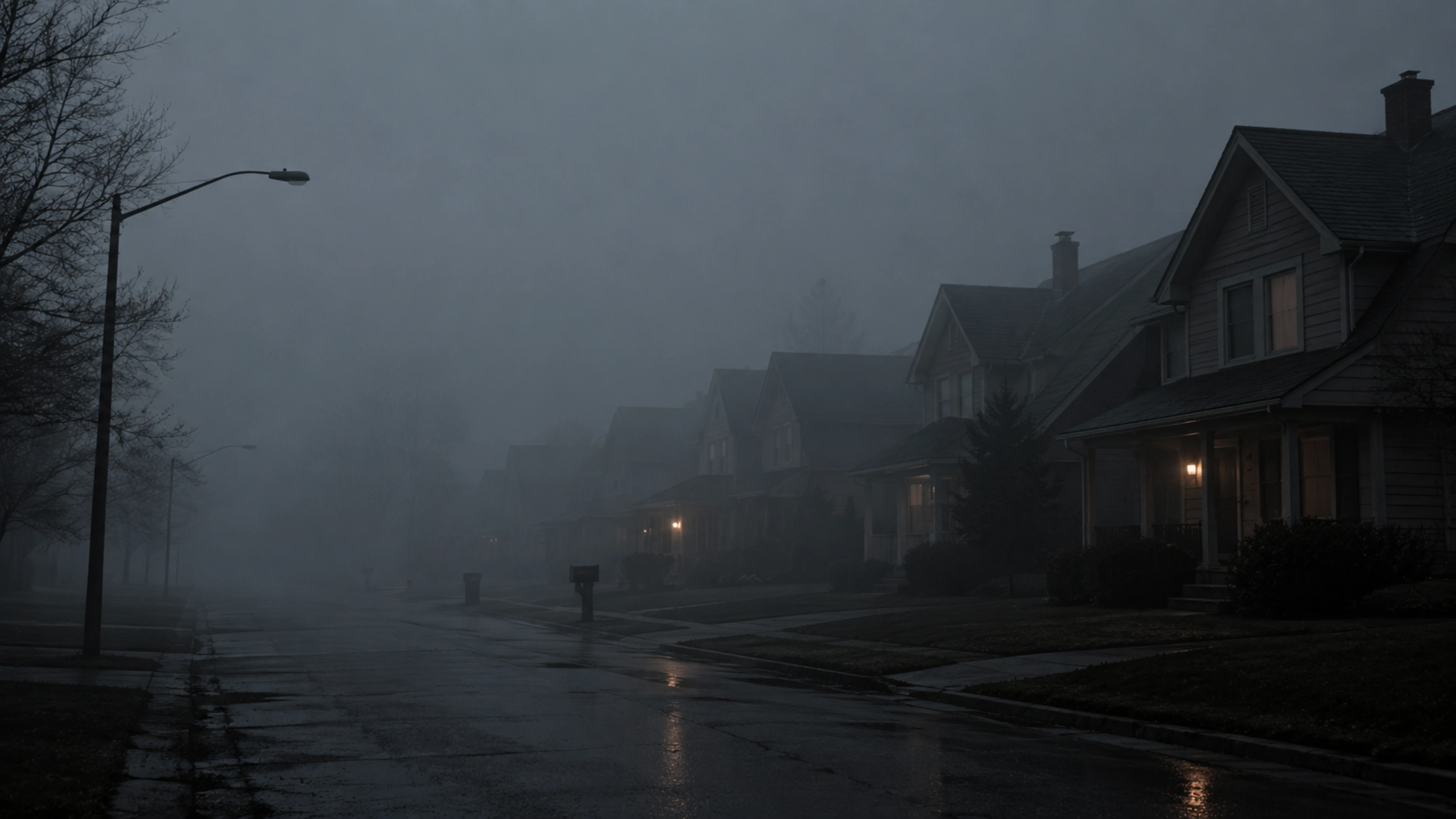
A row of quiet suburban houses fading into an early morning fog
THE NEIGHBORHOOD / 01

Routine is a quiet anesthetic. It teaches us what to look at and what to ignore.

HOW THE HUMAN MIND MAINTAINS COMFORTABLE ILLUSIONS

We see what fits the script we have written for others.

Social psychology demonstrates that human beings categorize others based on superficial social cues. Uniforms, professional titles, neighborly habits, and conversational tics create a mental framework. Once a person is slotted into a category—the quiet accountant, the helpful gardener, the polite commuter—our brains stop actively evaluating their behavior.

Minor anomalies that do not fit the script are quietly edited out. If a neighbor leaves at unusual hours or avoids speaking about their past, our minds invent benign explanations: a demanding job, a private temperament, personal grief. We normalize the abnormal because disruption requires emotional labor.

This cognitive defense mechanism is known as normalcy bias. When confronted with evidence that challenges our foundational safety—the idea that danger can wear a familiar, smiling face—our initial reflex is rejection.

We prefer an unsettling reality to remain invisible rather than disrupt the peaceful architecture of our daily lives. The stranger living beside us is protected not by their own cunning, but by our collective unwillingness to look too closely.
“
The most effective disguise is not a false name or a darkened face, but a predictable routine that blends seamlessly into the background.
KODAMA / JOURNAL NOTE

We are rarely fooled by strangers.
We fool ourselves about the people we think we know.

THE DYNAMICS OF SUSTAINED DECEPTION

Living behind a wall built of ordinary moments.

Those who maintain long-term hidden identities understand human psychology better than most psychologists do. They know that grand gestures attract suspicion, whereas absolute banality is armor. They do not hide in dark alleys or abandoned warehouses; they hide in plain view behind manicured hedges and PTA meetings.

They give just enough information to satisfy casual curiosity—weather small talk, complaints about local taxes, a nod across the driveway—while maintaining an impenetrable boundary that prevents anyone from asking deeper questions.

To cross that boundary would feel like a breach of social etiquette. We are socialized not to pry, not to interrogate our peers, and to respect boundaries even when those boundaries enclose a vacuum.

Thus, the secrecy succeeds because it relies on our own politeness. The social contract that keeps communities civil is weaponized by those who have something to hide.

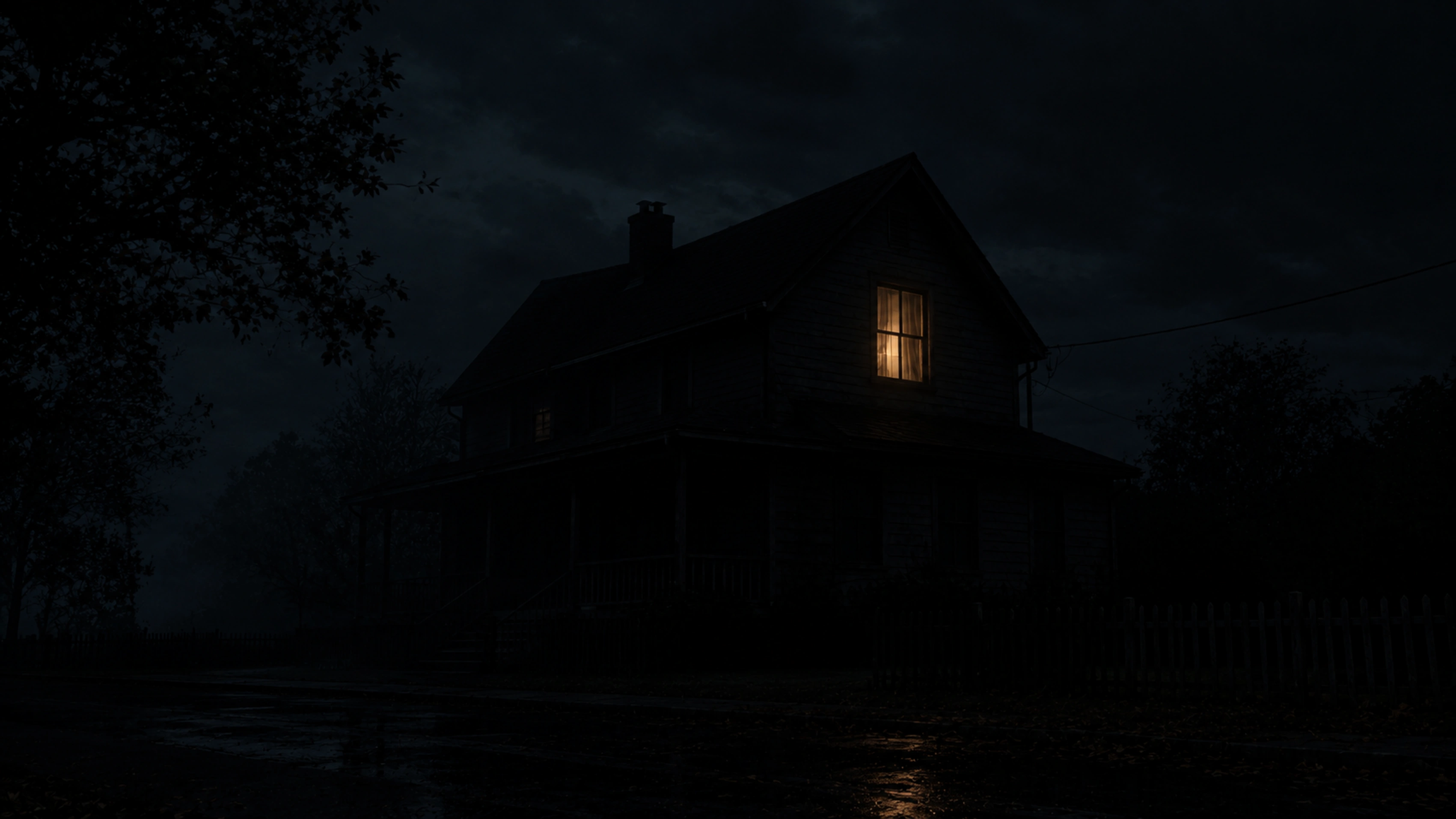
A solitary window glowing softly in a dark house during a late evening

WHEN THE ILLUSION SHATTERS BEYOND REPAIR

The psychological shock of unmasking a neighbor.

When the mask finally slips, the community does not just feel fear; it feels a deep, disorienting humiliation.

People replay years of casual conversations, searching for clues they missed, torturing themselves with retrospective clarity.

"He helped me carry my groceries." "She brought soup when my mother passed away." These recollections take on a haunting quality after the truth emerges. How could kindness and deception coexist within the same human hands?

The unsettling answer is that humans are capable of profound fragmentation. A person can be genuinely warm in one sphere of existence while executing cold calculus in another. Recognizing this capacity forces us to accept that nobody is entirely transparent—and that the stranger next door is simply a reminder of the quiet mysteries we all carry inside ourselves.

THE SECRET LIVES AMONG US BECAUSE WE LET IT REST.

Sometimes the safest place to hide is directly under the collective gaze of a trusting community.

WHY WE WILL ALWAYS MISS WHAT IS HIDDEN

The perpetual cycle of proximity and ignorance.

Even after scandals fade and media vans leave the neighborhood, the fundamental dynamic returns to normal. People put up new fences, plant new hedges, and settle back into their comfortable assumptions. We cannot live in a perpetual state of suspicion without destroying the fabric of community itself.

We accept the risk of the hidden stranger as the price of social trust. We choose to believe in the safety of our surroundings because the alternative is an exhausting, hyper-vigilant isolation.

And so, somewhere down the street right now, beneath a porch light left burning into the small hours of the morning, someone is living a life entirely invisible to those who know them best—protected by our collective, willing choice to look away.

THE LAST HORIZON

We live beside the unknown because certainty is a luxury our minds cannot always afford.

The psychology of the stranger teaches us humility about our perceptions. What we see is rarely the whole truth; it is only the version of reality others allow us to witness, filtered through our own desire for peace.

The next time you look across the street at a lit window behind which a quiet life unfolds, remember how little separates the known world from the abyss.

Proximity is not understanding. Sometimes, the person closest to you is the one you have never truly met.
RESEARCH NOTES PSYCHOLOGY / SOURCES
01
American Psychological Association

The Detection of Deception in Everyday Proximity: Cognitive biases and why trusted individuals evade scrutiny in close communities.

02
Personality and Individual Differences

Compartmentalization and Social Masks: Behavioral adaptation in individuals maintaining hidden identities (2019).

03
Journal of Applied Social Psychology

Normalcy Bias and Environmental Blindness: How routine interactions suppress threat detection among neighbors.

04
Journal of Personality and Social Psychology

The Illusion of Transparency in Interpersonal Relationships: Why familiarity breeds a false sense of security (2021).

NEXT IN THE JOURNAL What history chooses to remember ↗