
← Journal KODAMA
JOURNAL / 004
KODAMA JOURNAL TRUE STORIES 7 MIN READ

When real lives become unforgettable books.

004

Some stories are invented. Others happened to real people, in real places, leaving consequences that outlast the moment itself. When those lives become books, the past can feel startlingly close — and impossible to forget.

SCROLL TO READ

Some books end when the final page turns. Others follow us into ordinary moments: a quiet room, a passing conversation, a headline that suddenly means something different. We remember the people inside them as if their lives have briefly crossed our own.

The difference is not always the scale of the events. A famous crime can become a cultural obsession, but an intimate account of grief, a forgotten injustice or one person's struggle to survive can leave an equally lasting impression.

Real-life stories carry a particular weight because the reader knows that the events were not created solely for entertainment. Someone made those choices. Someone experienced those consequences. Families, communities and entire generations may have continued living with what happened long after public attention moved elsewhere.

A book can bring those experiences into focus. It can connect scattered events, restore context to a name or reveal the human life behind a case that once existed only as a headline.

But turning a real life into a memorable narrative is a delicate task. The writer must make the story understandable without pretending that life is as orderly as fiction. The facts must matter more than the desire for a perfect ending.

The most unforgettable true stories do not simply tell us what happened. They change how we understand the people who lived through it — and sometimes, how we understand the world around us.

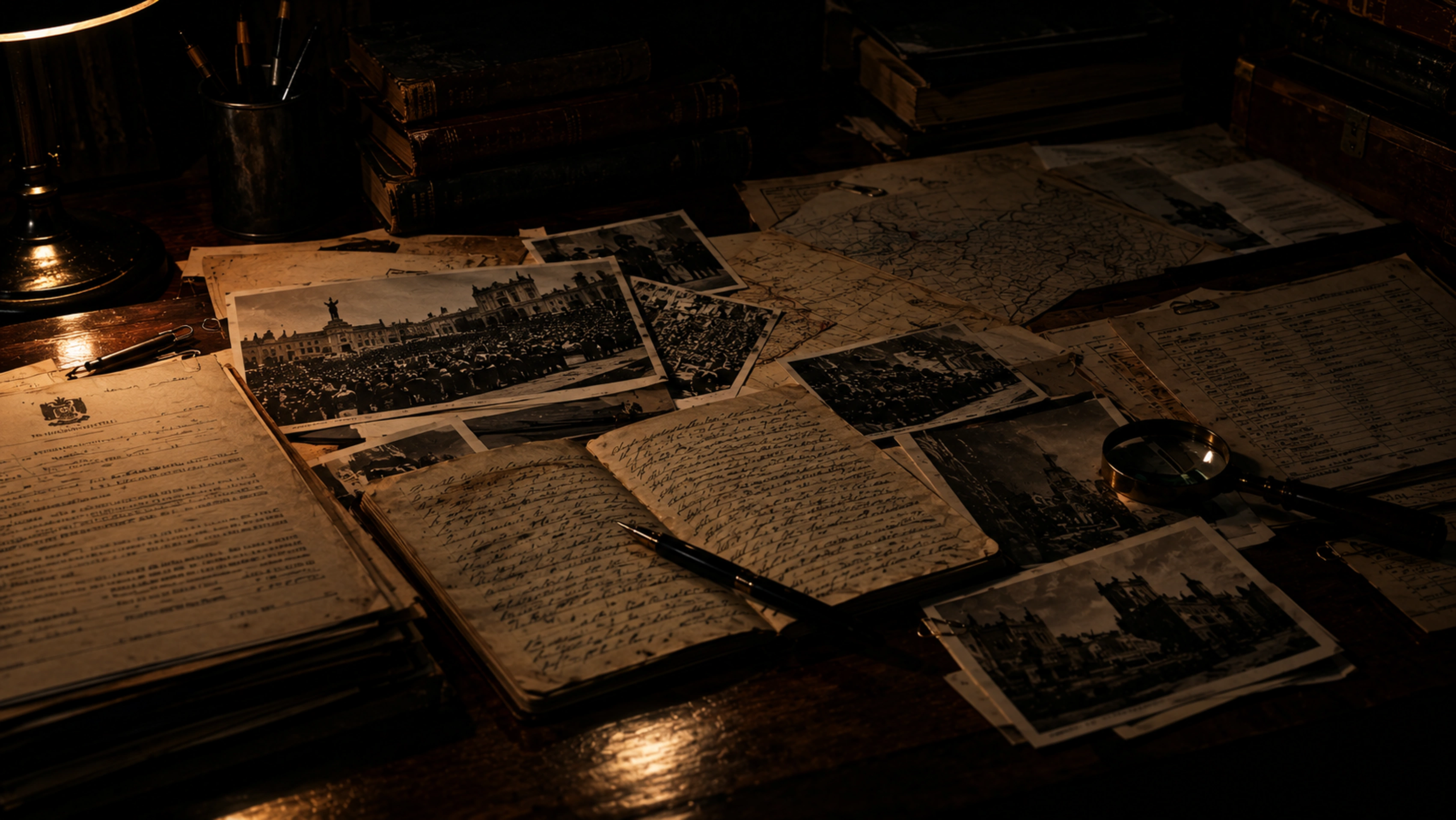
An old handwritten journal beside archival photographs and documents
THE HUMAN RECORD / 01

Before a story becomes a book, it belongs to the people who lived it.

HISTORY BECOMES PERSONAL WHEN WE KNOW WHO LIVED IT

A name becomes unforgettable when it becomes a life.

Headlines compress. They give us a name, an event, a date and a conclusion that fits into a few lines. The format can communicate what happened, but it rarely has room to reveal the full person behind the event.

A book can slow that process down. It can explore the relationships, contradictions, private decisions and ordinary routines that existed before a person became known for a single extraordinary moment.

In The Five, historian Hallie Rubenhold examines the lives of five women murdered by an unidentified killer in Victorian London, commonly associated with the Jack the Ripper case. Rather than centering the unknown murderer, the book turns attention toward the women themselves.

That change in perspective matters. A person remembered primarily through the circumstances of their death can become little more than a supporting character in someone else's story. Restoring the details of a life gives that person a fuller place in history.

“
Sometimes the most important part of a story is the life that existed before the world learned how it ended.
KODAMA / JOURNAL NOTE

This is one of the quiet powers of biography and narrative nonfiction. The reader is invited to look beyond a public identity and consider a more complicated human being — someone shaped by circumstance, relationships, ambition, vulnerability and choices.

The result does not have to make a person heroic or sympathetic. A fuller account can reveal admirable qualities alongside mistakes, or expose the difference between the public image and the private reality.

The headline records the event.
The story remembers the human being.

REALITY DOES NOT ARRIVE WITH A BEGINNING, MIDDLE AND END

The challenge is to tell the truth without losing the story.

Real life is rarely arranged for a reader's convenience. Important events may be separated by years. Witnesses can remember the same moment differently. Records may be incomplete, and some questions may remain unanswered even after extensive investigation.

Narrative nonfiction uses storytelling techniques to make documented events easier to follow. Writers may organize material around a timeline, a central question or a person's changing understanding of an experience.

This approach can make complicated history accessible. Instead of presenting a collection of dates and facts, the writer shows how events unfolded, what was at stake and why a particular decision mattered.

But there is an important boundary between shaping a narrative and changing the facts. A compelling scene cannot justify inventing a conversation. A satisfying conclusion cannot turn an unproven theory into certainty.

Researcher Susan Greenberg has examined the ethical tension at the heart of literary journalism: the effort to combine narrative power with a responsibility to verifiable events. In nonfiction, the consequences being described are not merely imagined.

That responsibility is especially important when a book deals with crime, trauma or contested memories. The writer is not simply building a plot. They are representing people whose lives may still be affected by how the story is told.

Archival documents and handwritten notes arranged for historical research

SOME BOOKS CHANGE THE WAY WE SEE A FAMILIAR SUBJECT

The most powerful stories give facts a human scale.

A statistic can tell us how widespread a problem is.

A documented life can help us understand what that problem means to someone.

In Just Mercy, lawyer Bryan Stevenson recounts his work with people facing injustice in the American legal system. The book connects individual cases with broader questions about punishment, race, poverty and the possibility of redemption.

Its force comes not only from describing legal problems, but from showing how institutions affect actual lives. Abstract questions about justice become questions about people, families, decisions and consequences.

Other books take readers into experiences they might never encounter directly. A memoir can describe the process of surviving a difficult childhood. A biography can trace the pressures behind a public figure's decisions. Investigative nonfiction can reconstruct events that remained hidden for years.

These forms are different, and each has its own limitations. A memoir is shaped by one person's recollection. A biography depends on the available records and testimony. Investigative reporting must weigh conflicting evidence and distinguish established facts from unresolved claims.

Yet all can offer something that a brief account often cannot: the opportunity to remain with a subject long enough for its complexity to emerge.

A LIFE IS ALWAYS LARGER THAN THE EVENT THAT MADE IT FAMOUS.

The page gives us time to look beyond the moment that first captured the world's attention.

WHEN THE PAST STILL HAS CONSEQUENCES

Some stories remain unfinished long after publication.

Crime narratives have a particular ability to draw readers into the past. Investigations provide documents, timelines, conflicting accounts and unanswered questions. The reader follows the process of determining what can be established from what remains uncertain.

But the significance of a true-crime book does not depend only on identifying an offender or explaining a mystery. It can also lie in revealing the lives affected by the crime, the failures that allowed it to happen or the institutional decisions that shaped what followed.

Truman Capote's In Cold Blood, published in 1966, helped bring the narrative treatment of a real murder investigation to a wide readership. Its lasting place in literary history also comes with continuing discussion about the boundaries between reporting, reconstruction and literary presentation.

That tension remains relevant. A true story can be gripping without every uncertainty being resolved. In fact, acknowledging the limits of the evidence may be essential to representing the people involved fairly.

There is a responsibility to the living and to those who can no longer speak for themselves. Victims should not be reduced to plot devices. Families should not be treated as sources of drama. People accused of wrongdoing should not be portrayed as guilty on the strength of speculation alone.

A careful book can hold attention while resisting those shortcuts. It can present evidence, explain disagreements and leave some questions open rather than manufacturing a certainty the record does not support.

A solitary reading desk with a notebook and a stack of archival books
THE LONG MEMORY / 03

A book can preserve a question without pretending to possess every answer.

THE DETAILS THAT REMAIN AFTER THE FINAL PAGE

We remember the stories that change our perspective.

An unforgettable book does not necessarily leave the reader with a simple lesson. Sometimes it creates a more difficult understanding: that justice can be imperfect, that memory can be incomplete, or that a person can be more complicated than the label attached to them.

These stories can also challenge the distance between public events and private experience. History may record a date, a verdict or a political decision. A carefully researched narrative can show how those events were experienced by the people who lived through them.

The connection is not always comfortable. A book may reveal prejudice where readers expected fairness, uncertainty where they expected proof, or ordinary human weakness where they expected a clear division between heroes and villains.

That complexity can be the reason a story stays with us. Instead of closing a subject, it changes the questions we bring to it. We may return to the book because a detail now seems more significant, or because something we have learned since reading it has changed our perspective.

The most enduring books do not need to make every person admirable or every event meaningful. They need to give the reader enough truthful detail to see the human reality more clearly.

STORIES CAN PRESERVE LIVES — OR DISTORT THEM

To remember someone is also to consider how their story is being told.

Every nonfiction book is shaped by choices. The writer decides which documents to include, whose testimony to foreground, which events deserve explanation and where the narrative should end.

Those choices influence the reader's understanding. A story that focuses only on a person's worst moment can erase everything that came before it. A story that ignores contradictory evidence can make a fragile conclusion seem certain.

Responsible storytelling does not mean removing every difficult detail or avoiding uncomfortable conclusions. It means being clear about the difference between documentation, recollection, interpretation and speculation.

The goal is not to make the story less compelling. It is to ensure that its emotional power does not come at the expense of accuracy or human dignity.

When real lives become books, the result can outlast the original news cycle by decades. That longevity makes the writer's choices matter. The narrative may become the version of events that future readers encounter first.

A memorable book should leave room for the difference between what is known and what remains uncertain. It should also remind us that no account, however vivid, can contain an entire human life.

08 / THE LIVES THAT REMAIN

The page turns. The lives inside it remain.

We read true stories because we want to know what happened. We keep reading because the facts begin to mean something beyond the sequence of events. A stranger becomes a person. A distant tragedy becomes a human experience. A forgotten name returns to view.

The books that stay with us do not always offer comfort or closure. Sometimes they leave us with unresolved questions, a more complicated view of justice or an awareness of how much remains outside the record.

Their lasting power comes from the encounter between documented lives and the attention we give them. We cannot change what happened to the people on the page, but we can choose to approach their stories with care, curiosity and a willingness to look beyond the headline.

A story can preserve what time tries to erase. And a life remembered in full is never just a headline.
RESEARCH NOTES 004 / SOURCES
01
Susan Greenberg — Journalism

The Ethics of Narrative: A Return to the Source. Research on the relationship between literary storytelling, verifiable events and nonfiction ethics.

02
Introduction to Narrative Journalism

An educational resource exploring narrative nonfiction, research, truthfulness and the responsibilities of the writer.

03
Hallie Rubenhold — The Five

Publisher information for the historical nonfiction book that restores attention to the lives of five women murdered in Victorian London.

04
Equal Justice Initiative — Just Mercy

Background on Bryan Stevenson's work and the real cases behind his account of injustice in the American legal system.

NEXT IN THE JOURNAL Why do we keep turning the page when we already know we shouldn't? ↗