
← Journal KODAMA
JOURNAL / 003
KODAMA JOURNAL PSYCHOLOGY 8 MIN READ

Why are we fascinated by darkness?

003

We turn away from danger, yet we look at it. We fear the unknown, yet search for stories about it. From unsolved murders to psychological thrillers, our fascination with darkness reveals a complicated relationship between fear, curiosity and the human mind.

SCROLL TO READ

There is a particular kind of story we find difficult to leave alone. A disappearance without an explanation. A crime that remains unsolved. A person whose actions seem impossible to reconcile with the life they appeared to lead. We may find the subject disturbing, even frightening, and still feel compelled to learn more.

The contradiction is familiar. If something makes us uncomfortable, why do we choose to spend time with it? Why do we watch documentaries about murder, listen to accounts of real violence or deliberately seek out films designed to frighten us?

It is tempting to assume that this interest must come from a desire for shock, a lack of empathy or a fascination with violence itself. But human motivation is rarely so straightforward.

Some people want to understand how a crime happened. Others are interested in the psychology of a person who commits it. Some are drawn to the puzzle, the investigation or the unanswered questions. Others enjoy the sensation of being frightened while knowing that the immediate danger is not real.

These experiences overlap, but they are not interchangeable. Enjoying a fictional horror film is not the same as wanting to witness real suffering. Being curious about a criminal mind does not mean admiring its actions.

To understand our fascination with darkness, we have to look at what the mind may be seeking when it approaches something it would ordinarily prefer to avoid.

A dimly lit room with old books and papers disappearing into shadow
THE MIND / 01

Sometimes the questions that unsettle us are the ones we most want to understand.

THE DESIRE TO KNOW WHAT WE WOULD RATHER AVOID

Not everything that interests us has to be pleasant.

Psychologists use the term morbid curiosity to describe an interest in information about dangerous, threatening or disturbing things. The word "morbid" can make the idea sound unusual, but curiosity about potential threats is a recognizable part of human behavior.

We want to know what happened during an accident, why a person disappeared, what made a crime possible or how someone could carry out an act that seems incomprehensible. The subject may repel us emotionally while attracting our attention intellectually.

In research published in 2021, psychologist Coltan Scrivner developed and tested a Morbid Curiosity Scale. The research examined differences in people's interest in potentially dangerous phenomena and found that this curiosity could predict interest in disturbing information and entertainment.

The important distinction is that curiosity is not the same as approval. Wanting to understand a dangerous event does not automatically mean wanting it to happen or taking pleasure in another person's pain.

“
We can be drawn to a subject because we want to understand it, not because we want to experience its consequences.
KODAMA / JOURNAL NOTE

This helps explain why disturbing subjects can attract people with very different personalities and motivations. One person may want to examine the facts of a case. Another may be interested in the psychology behind a person's decisions. Someone else may simply want to resolve the uncertainty surrounding an unanswered question.

Morbid curiosity is not a diagnosis, and a person's interest in crime or horror cannot, by itself, establish that they have a psychological disorder or a harmful personality trait.

Fear tells us to pay attention.
Curiosity asks us to look closer.

UNCERTAINTY CAN BE HARDER TO ACCEPT THAN BAD NEWS

The mind keeps returning to what it cannot explain.

An unresolved question leaves room for possibilities. When we do not know what happened, the mind can move between competing explanations, searching for the detail that might make one of them more convincing.

This is part of what makes unsolved cases so compelling. A timeline has a gap. A witness remembers something unusual. A piece of evidence seems inconsistent with the accepted account. Each detail creates another question.

The desire to resolve uncertainty can motivate careful research. We compare sources, revisit earlier assumptions and look for information that might change our understanding. Learning something new can be rewarding in its own right.

But uncertainty can also encourage speculation. When reliable information is missing, a theory may feel satisfying simply because it provides a coherent explanation. The human mind can prefer a complete story over an honest acknowledgment that the answer is unknown.

That is where curiosity needs discipline. A possible explanation is not necessarily the correct one. A coincidence is not proof of a connection, and a theory that sounds convincing does not become a fact through repetition.

The most responsible form of curiosity remains willing to discover that an attractive theory is wrong — or that the available evidence cannot settle the question.

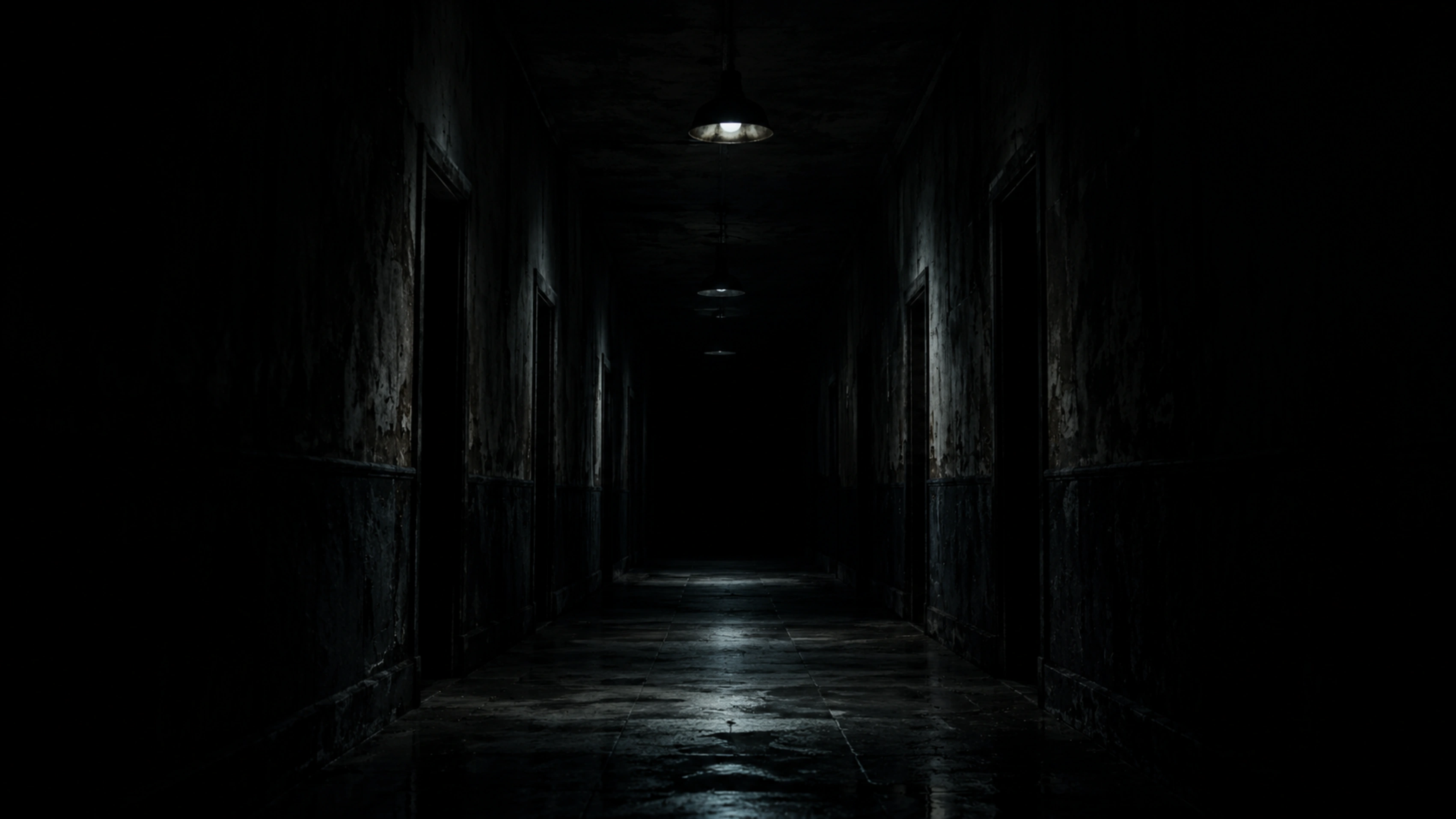
An empty corridor fading into darkness

WHEN THE THREAT IS CLOSE ENOUGH TO FEEL — BUT NOT TO HURT

Why do we choose to be frightened when we are safe?

A horror film can make a familiar room feel unfamiliar.

A sound in the dark can make the body react before the mind has time to explain it.

Horror entertainment deliberately creates uncertainty. It withholds information, delays an explanation and encourages the audience to imagine what might happen next. Music, editing, silence and visual framing can all intensify anticipation.

Yet the viewer usually knows something the character does not: the experience is a story, and the immediate threat is contained within it. That distance can make fear more manageable, even while the emotional and physical reactions feel real.

Researchers often discuss this kind of experience through the idea of recreational fear — fear encountered in a context where a person can engage with it voluntarily and, in many cases, step away from it.

In an interview published by the American Psychological Association, behavioral scientist Coltan Scrivner describes how people approach scary entertainment for different reasons. Some seek intense sensations, while others are interested in learning, testing their reactions or exploring fear within a controlled setting.

Not everyone enjoys this experience, and not every frightening story feels safe to every viewer. Personal history, sensitivity and the subject matter itself can change how a story affects someone.

THE EXPERIENCE IS NOT THE SAME AS THE DANGER.

Sometimes the distance between a threat and its consequences is what allows us to explore it.

REAL EVENTS MAKE THE QUESTIONS MORE PERSONAL

True crime offers more than a mystery to solve.

Fictional horror allows us to explore imagined threats. True crime introduces a different kind of discomfort: the events actually happened to real people, often in ordinary places and under circumstances that appear disturbingly familiar.

A documentary may begin with a missing person, a crime scene or a seemingly ordinary day that ended in tragedy. As the story develops, the audience follows the investigation, learns about the people involved and considers how a sequence of events became possible.

For some viewers, the appeal lies in the investigative process. They want to understand how evidence was interpreted, why a lead mattered or where an investigation went wrong. Others are drawn to the human decisions and relationships surrounding the case.

A 2026 study in the British Journal of Psychology examined people's consumption of true crime and identified several motivations, including morbid curiosity, defensive vigilance and excitement. The findings suggest that people do not all consume the genre for the same reason.

Defensive vigilance refers to an interest connected with recognizing potential danger. Some people may pay attention to a case because they want to understand warning signs, risky situations or decisions that could have consequences for their own safety.

That does not mean every true-crime story offers reliable lessons about personal safety. Cases are complex, and the details that matter in one situation may not apply to another. A documentary is not a substitute for a balanced understanding of risk.

“
We may be trying to understand not only what happened to someone else, but how such an event could happen at all.
KODAMA / JOURNAL NOTE

There is also an ethical distinction between understanding a case and turning real suffering into spectacle. Victims and their families are not fictional characters. Their lives cannot be reduced to a twist, a clue or an entertaining ending.

Responsible true crime keeps the people affected by a crime in view. It distinguishes established facts from allegations, avoids presenting speculation as proof and treats the absence of an answer with care.

A desk with research notes and books illuminated by a single lamp
THE INVESTIGATION / 03

Understanding a case means examining the evidence, not simply choosing the most compelling story.

INTEREST IN DARK SUBJECTS DOES NOT HAVE ONE MORAL MEANING

Does fascination with darkness mean a lack of empathy?

It is easy to assume that someone who watches disturbing material must be emotionally detached from the people involved. But that conclusion goes further than curiosity alone can justify.

People can be interested in a case precisely because they recognize its human consequences. They may wonder what a victim experienced, how a family endured uncertainty or how a community responded to a terrible event.

Other people approach the same story primarily as an investigation, focusing on timelines, forensic evidence and competing explanations. A single person may move between these perspectives while reading or watching the same case.

Research on morbid curiosity and horror is still developing. It does not support a simple rule that fans of dark subjects are either more compassionate or less compassionate in every situation. Individual motivations and responses vary.

It is also worth separating interest in a disturbing subject from enjoyment of real suffering. A person might be fascinated by how an investigation unfolds while feeling sadness or anger about the crime itself. Interest, excitement, disgust and empathy can exist together.

The ethical question is not simply whether someone is curious. It is how that curiosity is expressed: whether it respects the people involved, whether it relies on credible information and whether it avoids turning unsupported accusations into conclusions.

INTEREST SHOULD NOT HAVE TO BECOME OBSESSION

There is a difference between exploring fear and carrying it everywhere.

Dark stories affect people differently. One viewer may finish a documentary and move on with the rest of the evening. Another may find that certain details stay with them, interrupt sleep or make ordinary situations feel threatening.

These reactions do not mean that someone has done anything wrong by watching a story. They do suggest that personal boundaries matter. The same subject can be manageable on one day and overwhelming on another.

It can help to notice how the material affects your mood, sleep and sense of safety. Taking a break, choosing less graphic coverage or switching to a different subject are reasonable responses when the experience stops feeling worthwhile.

Repeated exposure to disturbing stories does not automatically make someone more prepared for real danger. Nor does consuming more details guarantee a deeper understanding of a case. Sometimes the most responsible decision is to stop searching.

Curiosity is valuable when it opens a path toward understanding. It becomes less useful when the search for certainty leaves no room for rest, perspective or respect for the limits of what can be known.

DARKNESS CAN BE A SUBJECT OF STUDY, NOT JUST FEAR

Perhaps we are not drawn to darkness itself, but to what it might reveal.

We want to understand what frightens us.

We want to know what people are capable of.

And sometimes, we want an explanation for what refuses to make sense.

The appeal of dark stories may involve several overlapping motives: curiosity about danger, the challenge of solving a mystery, the intensity of controlled fear, interest in human behavior or the desire to understand how an event unfolded.

No single explanation accounts for every reader, listener or viewer. People arrive at these stories with different experiences, sensitivities and questions.

What matters is the distinction between looking closely and assuming we already understand. A serious investigation remains open to new evidence. A serious reader remains willing to question a favorite theory or reconsider an initial reaction.

The darkness in these stories can reveal something about violence and vulnerability. It can also expose the limits of our assumptions, the fragility of memory and the discomfort of not knowing.

Our fascination does not necessarily provide a verdict on who we are. It offers a starting point for asking better questions — about danger, about other people and about ourselves.

09 / THE HUMAN MIND

We look into the dark because the unknown asks something of us.

Our fascination with disturbing stories is not a single instinct with a single explanation. It can involve curiosity, fear, learning, uncertainty and the desire to make sense of events that challenge our understanding of the world.

Sometimes we look for warning signs. Sometimes we look for a solution. Sometimes we want to experience fear from a distance, where the story can be paused and the room around us remains familiar.

None of these motives makes every dark story harmless, and curiosity does not remove our responsibility toward real people. The context matters. So does the way a story is told, the evidence it uses and the lives it represents.

Curiosity takes us toward the unknown. Understanding begins when we learn to look carefully.
RESEARCH NOTES 003 / SOURCES
01
American Psychological Association

Why Do We Love Scary Movies? An interview about morbid curiosity, horror and recreational fear with behavioral scientist Coltan Scrivner.

02
Personality and Individual Differences

The Psychology of Morbid Curiosity: Development and Initial Validation of the Morbid Curiosity Scale (2021).

03
British Journal of Psychology

Out of the Dark: Psychological Perspectives on People's Fascination with True Crime. Published in 2026.

04
Psychological Review

Morbid Curiosity as an Adapted Motivation to Explore Ambiguous but Survival-Relevant Stimuli (2026).

NEXT IN THE JOURNAL When real lives become unforgettable books ↗